Mission
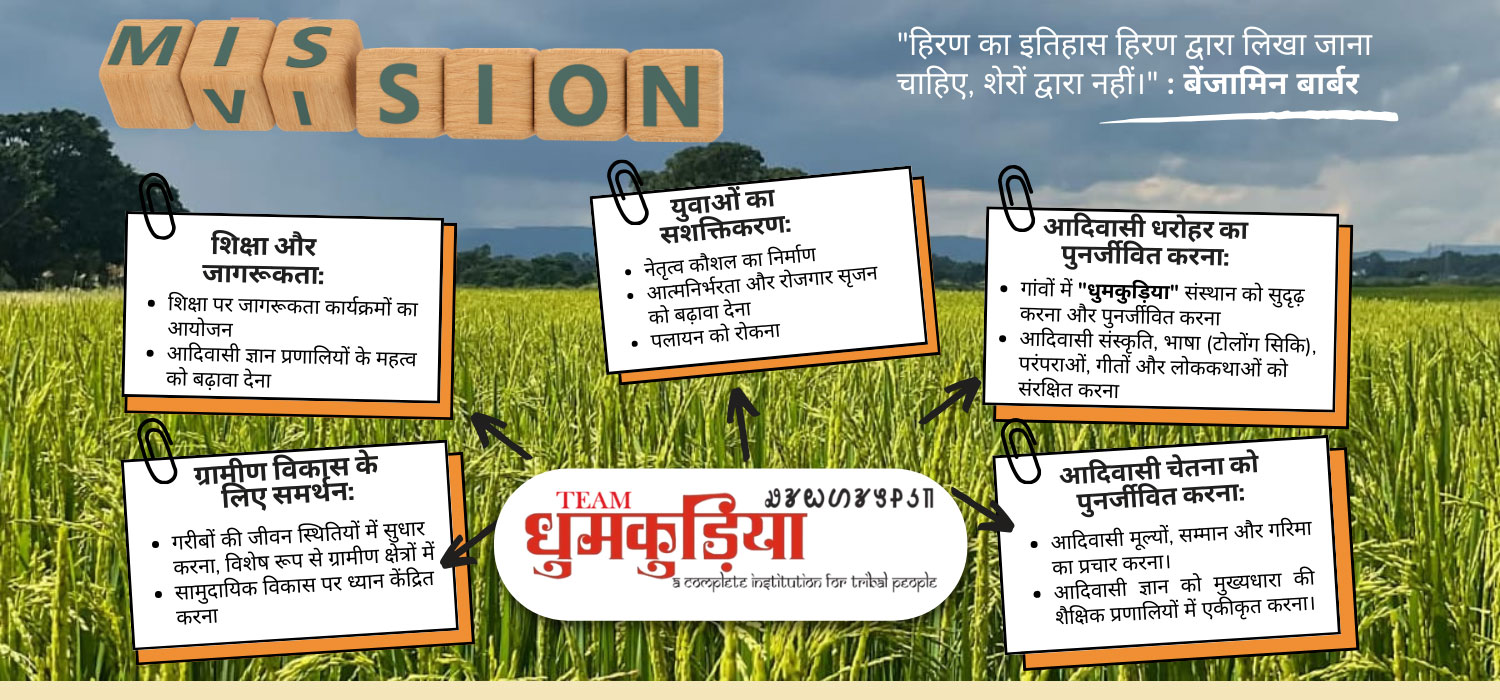
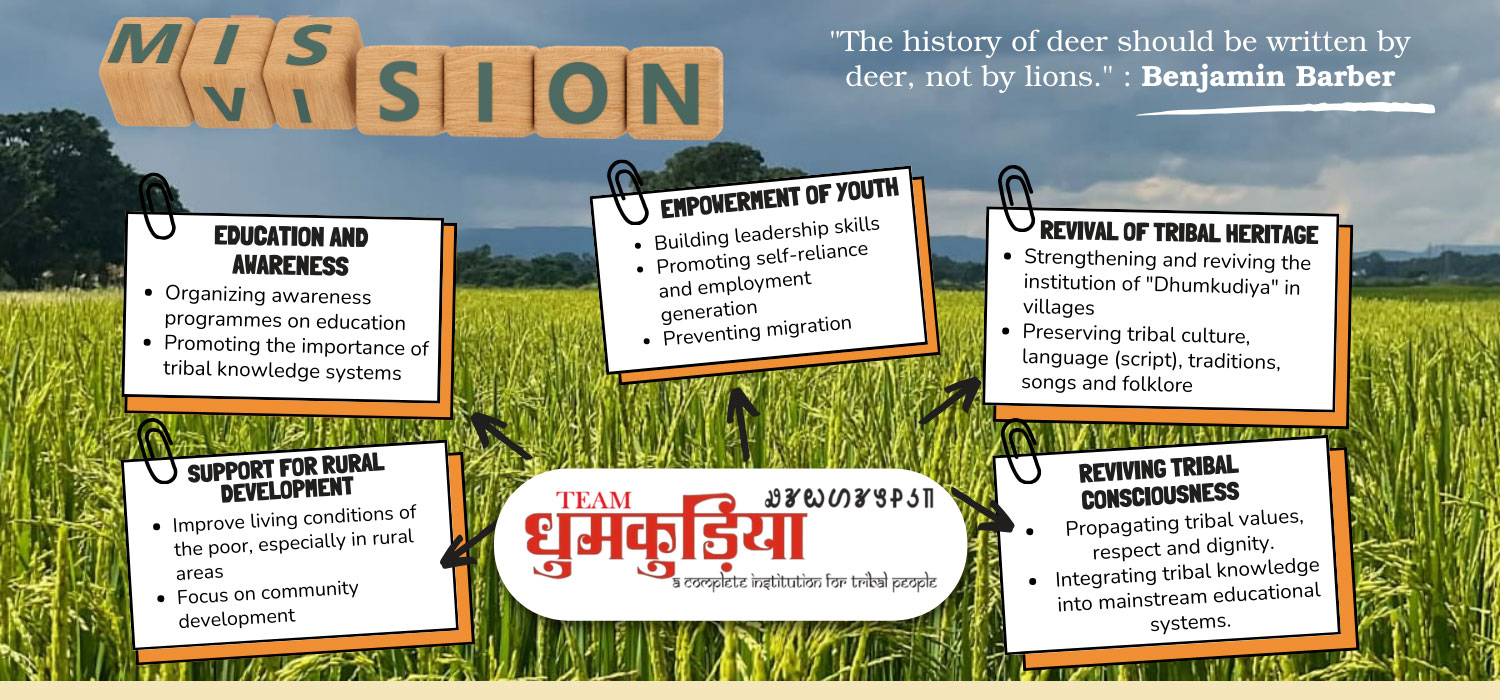
At Team Dhumkudiya , our mission is to empower tribal communities by blending cultural preservation with modern development. Our objectives reflect our commitment to sustainable growth, education, and the revival of indigenous heritage.
Youth Empowerment
- We believe that the future of tribal society lies in the hands of its youth. By building confidence, skills, and leadership, we prepare young people to become change-makers in their communities.
- Leadership & Self-Reliance: Training tribal youth to take up leadership roles, make independent decisions, and contribute meaningfully to society.
- Employment & Entrepreneurship: Creating skill-based training, job opportunities, and support for small-scale enterprises to reduce dependency on migration.
- Reducing Distress Migration: Encouraging local livelihood solutions to ensure that young men and women are not forced to leave their villages in search of survival.
Reviving Tribal Heritage
- Cultural identity is the backbone of tribal life. We are committed to reviving and sustaining the traditions that keep communities united.
- Strengthening Dhumkudiya: Reviving this traditional tribal institution that brings youth together for learning, cultural bonding, and community service.
- Preserving Tribal Languages: Safeguarding Tolong Siki (the script of the Kurukh/Oraon language) and promoting the use of tribal dialects among younger generations.
- Cultural Preservation: Documenting and revitalizing folklore, songs, rituals, and art forms that are fading with time.
- Celebrating Tribal Knowledge: Recognizing traditional wisdom in agriculture, healing, and social practices as vital contributions to humanity.
Education & Awareness
- Education is the most powerful tool for empowerment. We work towards bridging the gap between tribal wisdom and formal education.
- Promoting Education: Encouraging families to value schooling while integrating cultural identity into the learning process.
- Highlighting Indigenous Knowledge: Positioning tribal knowledge systems as an equally important form of education.
- Awareness Programs: Organizing campaigns on health, women’s rights, environment, and social issues to build informed, empowered families.
Rural Development
- Sustainable development begins at the grassroots. We focus on holistic rural development to uplift marginalized communities.
- Improving Living Conditions: Addressing poverty, lack of basic facilities, and inadequate housing for tribal families.
- Community-Based Initiatives: Encouraging villagers to plan and lead their own development projects for long-term sustainability.
- Health, Livelihood & Infrastructure: Supporting initiatives in primary healthcare, clean water, renewable energy, road access, and livelihood generation.